Showing posts with label barvano z rastlinami. Show all posts

Monday, 18 April 2022

Krhlika Alder Buckthorn

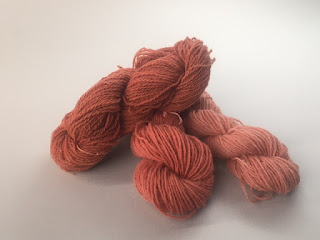
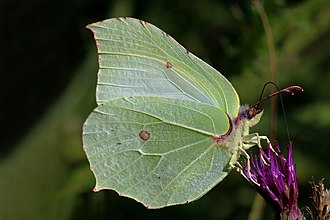
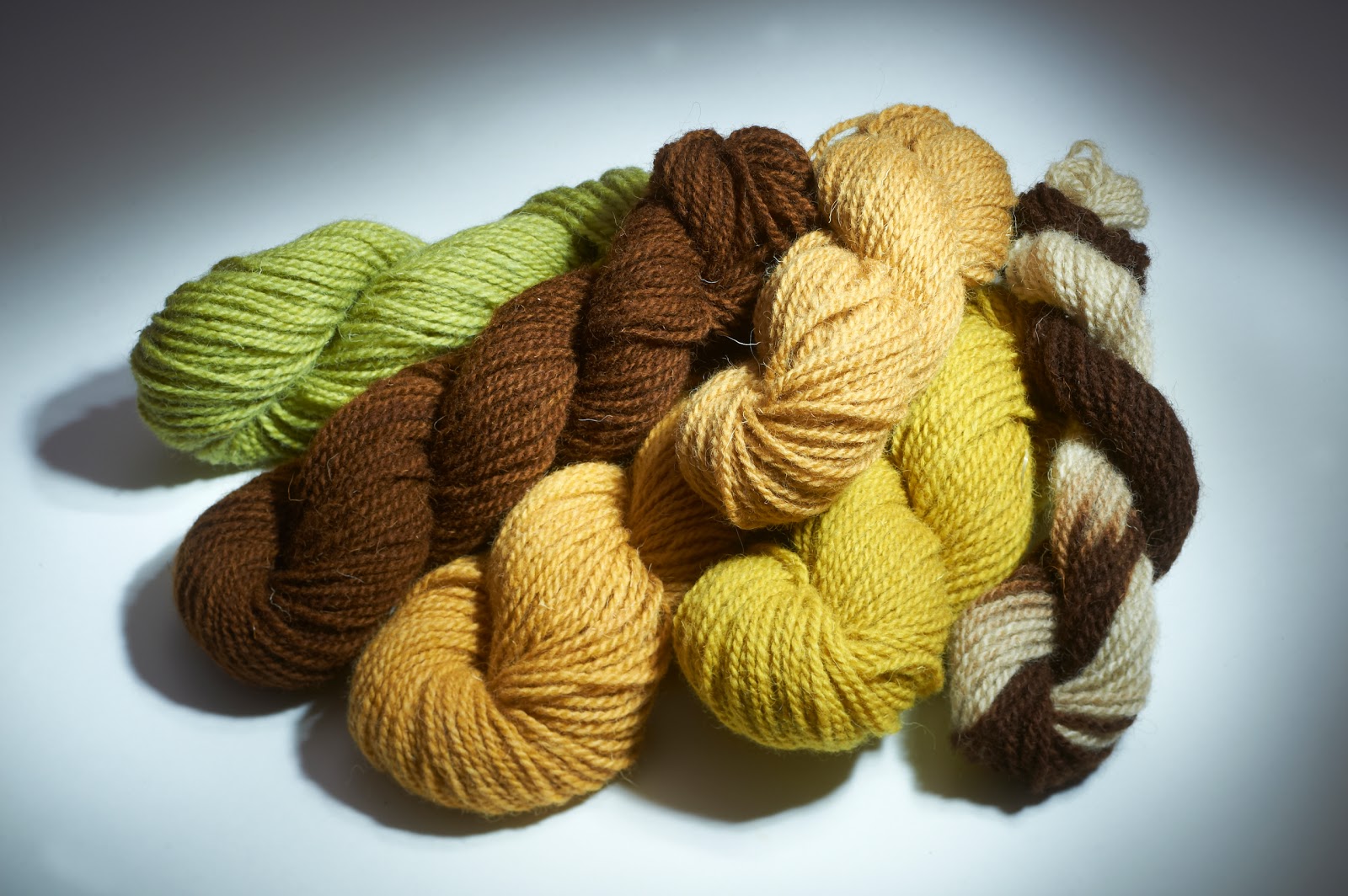
 Krhlika je en tak navaden grm, nič posebnega na pogled. Ima pa, vsaj zame, dve posebnosti: prva je, da se na njej hrani gosenica metulja citronček (Gonepteryx rhamnii), druga pa to, da daje krasne barve na volni. 


 Alder buckthorn is a bush with nothing special about when you look at it. But it is special to me in two ways: it is the host to the caterpillar of brimstone butterfly (Gonepteryx rhamnii), and secondly,it gives beautiful colours on wool.


 Wikipedia

 
Po navadi olupim sveže vejice, ko so v soku, včasih pa tudi kaj starejšega in debelejšega. Ob lupljenju izteka živorumen sok, ki močno obarva prste, a se na srečo zlahka izmije.


I usually peel fresh twigs when sappy, and sometimes also older and thicker twigs. Bright yellow sap runs from them that badly stains my fingers but is fortunately easily washed off. 


 Preja na zgornjih slikah je strojno predena in te sem pobarvala največ. Pravzaprav toliko, da še ne vem, kako bi jo uporabila in je na voljo tudi kakšni ljubiteljici domače volne, barvane z rastlinami.  

The yarn in the pictures above is machine spun and I dyed a lot of it. In fact so much that I do not have a use for all of it. So it is available to those who love naturally dyed autochthonous farmer's wool.   

Za izziv sem pobarvala česano volno in jo spredla na kolovrat. Je debelejša in neenakomerna.

I challenged myself and dyed carded wool and spun it on my spinning wheel. It is thicker and of  uneven diameter.  


Pletena v gladkem vzorcu 

Knit in stockinette stitch


Tudi ta je na voljo. Spredla sem različne količine različnih odtenkov in debelin - mogoče bi pa še lepše  prišla do izraza v tkanju? 

This yarn is also available. I've spun various amounts of different shades and thicknesses - perhaps it would best show its beauty in weaving?    


Friday, 29 March 2013

Vesele velikonočne praznike! - Happy Easter holidays!!


.... vsem obiskovalcem bloga.
Letos sem naredila voščilnice v obliki pirhov. V prvi seriji sem v jajčast izrez kartona vstavila barvne kose filca, voščilnice izpisala, vstavila v kuverte, zalepila, napisala naslove in prilepila znamke. Šele ko sem vse nesla na pošto, me je prešinilo - nisem jih poslikala :-( 
Za drugo serijo sem jajčaste kartončke oblekla v napol sfilcano  volno, barvano s košeniljko, in jih prilepila na kartončke. Te pa sem poslikala, preden je bilo prepozno.

... to all visitors of my blog.
This year I made greeting cards in the shape of coloured Easter eggs. In the first series I used cards with egg-shaped cut-outs where I placed natural dyed pieces of loosely felted wool, wrote my greetings, inserted the cards in envelopes, closed (with glue), wrote the addresses, and placed the stamps. It was only when I was carrying all of them to the postbox that I realized I hadn't taken any photos :-(
To make the other series I dressed egg-shaped carton cut-outs into half felted wool dyed with cochineal and glued them onto sartons. And I did take photos before it would be too late. 
.

Monday, 18 June 2012

Slike - Photos


Končno sem prišla do slik moje barvane volne, ki so - vsaj v mojih očeh - zares lepe in vrhunske kakovosti. Seveda jih nisem posnela jaz, ampak g. Tomo Jeseničnik, in sicer za katalog Podobe rokodelske ustvarjalnosti, ki je bil izdan v sodelovanju slovenskih in avstrijskih organizacij za domačo in umetnostno obrt.
At last I obtained pictures of my dyed wool that look  - at least to my eyes - very beautiful and of top quality. Of course, I didn't take them myself; it is Mr. Tomo Jeseničnik that contributed the pictures for the catalogue representing the works of some Slovenian and Austrian Art-n-Crafters.

Saturday, 31 March 2012

Volnene velikonočne voščilnice - Woolly Easter cards


 Kmalu bo Velika noč in počasi skončujem svoje letošnje volnene velikonočne voščilnice.  Nekaj sem jih naredila s striženo volno in nekaj s česano, vso seveda barvano z rastlinami. Filc sem pritrdila na ročno izdelan papir. Na nekatere sem svoje voščilo napisala na papir, pri tistih, ki so pregrobi za pisanje, pa sem dodala razlikano čajno vrečko, obarvano s čajem.

Easter holidays are near and I've nearly completed my woolly Easter cards. I made some cards using shorn locks and others with carded wool; of course all wool is natural dyed. I fastened felted pieces onto handmade paper. I wrote some wishes on the paper and when it was too rough for writing I added a tea dyed bag I had ironed before.


Takole so bili videti filci v vodi, kjer sem jih spirala.
This is how felted pieces looked floating in rinsing water.

Začetek je bil videti takole: strižena volna, česana volna in različne nitke in koščki. 
This was the beginning: wool flocks, carded wool and various yarns and pieces.

Nekaj voščilnic pa sem izvezla na zeleno sintetično platno in na stramin.
I also stitched some Easter cards on green synthetic cloth and on etamine.

Voščilnice sem delala v nekakšnem mirnem veselju in je to zame tudi priprava na velikonočne praznike. Upam, da bodo razveselile tudi tiste, ki so jim namenjene.

I made the cards in sort of peaceful joy and it was also my preparation for the Easter holiday. I hope they raise the spirits of those who will receive them.

Monday, 9 January 2012

Topla volnena kapa - A warm wool hat


Tole kapo sem spletla za sina, po njegovih željah: kite različnih širin, neraztegnjene - močno reliefne, kapa tako dolga, da se zadaj pobesi, iz debele volnene preje iz treh niti. Barvana je (verjetno) z rabarbarinimi listi v eni štreni v več stopnjah, tako da je v dveh niansah, vmes pa še prevezana, da je ostala skoraj bela oziroma zelo svetla. Dodala sem še enobarvno svetlo in še tretjo volno v malo bolj zelenkastih niansah. Pa vse je moralo biti namešano brez določenega reda, v nepravilnih presledkih, tako da mi je tudi pri kitah "ratalo" kaj nepravilnega, he-he!

The hat was knit for my son, custom made to his desire: the plaits are of various widths, not stretched so that they remain strongly embossed, the hat is so long that it hangs down at the back, and the wool yarn is three-ply. It was dyed (probably) with rhubarb leaves in one long skein in several degrees so that the colour is in two nuances. Besides, I tied it in several places where it remained almost white. I also used a yarn of very light solid colour and a third yarn in greenish colours. All this had to be mixed without any defined pattern, at irregular lengths, so that some irregularities also moved into the plaits, he-he!

Sunday, 27 November 2011

Volna vs. bombaž - Wool vs cotton


Tole ni kakšna pajčevina, ampak štrenice bombažne preje, prevezane z volneno prejo. In kaj je tu tako zanimnivega? Zame to, da sta bili obe barvani hkrati v istem loncu. Ta razlika, kako rastlinsko barvilo prime volna (namreč odlično) in koliko rastlinske barve sprejme bombaž - bore malo.
This is not a spiderweb but small skeins of cotton yarn tied with wool yarn. And what is so interesting about it? For me it is the fact that both were dyed in the same dyepot at the same time. The difference between the amount of plant dye taken by wool (excellent) and that taken by cotton (poor).
Tele niti so bile pobarvane z zelenimi orehovimi lupinami. Volna je temno rjava, bombaž pa sivkasto bež. Na nekaj mestih je videti precej močneje rdečkasto rjavo obarvane madeže. Nastali so tako, da sem vlažno prejo obesila nad lonec in jo samo delno pomočila v barvilno raztopino. Barva je nato potovala po mokri preji navzgor: različne barve, ki jih vsebujejo zelene orehove lupine, so potovale različno visoko, kar se na zviti štrenici ne vidi tako dobro, ko je visela nad loncem, pa je bilo dobro vidno. 
No, takole se igram z rastlinskimi barvili in temu rečem "rastlinska barvna kromatografija", he-he.
These yarns were dyed with green walnut hulls. The wool is dark brown and the cotton greyish-beige. Some spots are dyed fairly better - there are reddish-brown colorations. They developed when I hung the moist skein above the dyepot and dipped only a part into the dyeing solution. The colour travelled up the moist yarn: different colours contained in green walnut hulls travelled different distances upwards, which is not so well seen on the twisted skein but was very well seen on the skein hanging above the pot.
 Well, this is how I play with plant dyes and call it "plant colour chromatography", he-he.

Monday, 24 October 2011

Copatki - Tiny boots


Čisto majhni copatki iz domače volne, barvane z rastlinami (v resnici so precej bolj rumeni).
A za koga? Za Darjinega (moja drugorojenka) prvega, ki ga pričakujemo jutri :-)

25. oktobra: Copatki so za Naceta!

Tiny little boots made from wool of Slovenian native sheep and natural dyed (in reality they are much more yellow)
For whom, you may ask. For Darja's (my second daughter) first baby that is due tomorrow :-)

25 Octobre: The booties are for Nace (boy)!

Wednesday, 13 July 2011

Poletno barvanje 1 - Summer dyeing 1

Poletje je krasen čas za barvanje z rastlinami. Vse bujno raste, vse cveti, da kar ne vem, s čim začeti ... pa delam vsega po malem.
Summer is the excellent season for natural dyeing. Everything grows abundantly, blooms exuberantly so I just don't know what to start with ...so I use more or less everything.
Rabarbarine korenine sem imela v velikih kosih, pa sem jih tesno povila v štrene oprane volne, dala v velik kozarec, dolila toplo vodo in dala na sonce. Ker je bilo sonca dva tedna res veliko, je dobro opravilo delo - volna je rumena in živo oranžna, drap barva je pa od orehov.
Rhubarb roots I had were in large pieces so I wrapped them tightly in skeins of washed wool, placed them in a large glass jar, poured in warm water and placed in a sunny place. As the last two weeks were really sunny the sun did its job well - the wool yarn is yellow and bright orange, the beige part had been dyed with green walnuts.


Imela sem tri štrenice različnih neizrazitih barv - izčrpana kopel šentjanževke, jelševa skorja in cvetovi kokardije - pa sem polovice namočila še v delno izrabljeno kopel zelenih orehov. Zdaj je preja mnogo zanimivejša!
I had three skeins of various plain colours - an exhausted bath of St. John's wort, another of alder bark and of cocardia flowers - so I dipped halves into a partly exhausted bath of green walnuts. The skeins look much more interesting now!

Tidve štreni, pobarvani na soncu z rabarbaro, sem pomočila še v raztopino zelene galice.
I dipped these two skeins that had been sun dyed with rhubarb roots into a solution of ferrous sulphate. 
Tele nežno zelene štrene mi je v kozarcu z lučnikom in bakrovim acetatom prijazno pobarvalo sonce.
It was the sun that kindly dyed these lovely light green skeins in a glass jar with mullein flowers and copper acetate. 

Zeleni orehi, ki so junija odpadli po vetru in dežju, so dali tole čudovito temno čokoladno rjavo na volni.
Green walnuts that had fallen from branches after rain and wind in June gave this miraculous deep dark chocolate brown on wool yarn.

Wednesday, 16 March 2011

Velikonočne voščilnice - Easter cards


Bliža se Velika noč. V mislih na voščilnice sem šla malo pogledat, kakšne "volnene" voščilnice sem že delala, tako malo za navdih. Rdeči in modri pirhi so iz sintetično barvane volne, ostalo je barvano z rastlinami.

Easter is coming in a few weeks. Thinking about cards to make I had a look at the pictures of those I have made in previous years, to get some inspiration so to say. The red and the blue eggs are made of synthetically dyed wool, all others are natural dyed.

Sunday, 23 January 2011

Ni bil brasilwood, ampak logwood - Not Brasilwood but Logwood

Ni bil Brasilwood (Rotholz), ampak logwood (Blauholz). Uf, kako ta nemška imena zavajajo :-( Ves čas sem bila negotova, saj sem material dobila v dar, končno pa mi je dvome razpršila Jenny Dean, za kar sem ji hvaležna. No, ne glede na ime je tisto rdečkasto žaganje dalo krasne, močne barve. Pobarvala sem kar nekaj česane volne pa tudi preje. Ko mi jih zmanjka, bom uporabila še preostalo količino žaganja. --- No, it was not Brasilwood but Logwood. I had been given the material as a present and was told its name. Ugh, the German names can be so misleading :-( I was somehow uncertain as to the real nature of the material all the time, and then it was Jenny Dean to clear my doubts - thank you Jenny! Anyhow, regardless of its name the reddish sawdust gave gorgeous intense colours. I dyed both carded wool and yarn. When I run short of it I'll use the remaining amount of the sawdust.

Sunday, 25 July 2010

Brazilwood (Rotholz)

Pred časom sem dobila rdečkast lesni drobir v vrečki z napisom Rotholz (Wollknoll). Nekaj dni sem ga namakala v vodi, nato odlila tekočino in pobarvala prvo štreno (na levi). Ni mi bila všeč. Nato sem se lotila bombažnega blaga. Posula sem drobir (skupaj z rabljenimi koreninami barvilnega brošča), za nekaj dni prepustila soncu, da opravi nalogo barvanja in si dala delat bluzo (na spodnjih slikah). Ni mi bilo všeč.Končno sem za nasvet povprašala na Yahoojevi skupini NaturalDyes in drobir skuhala z malo kisa. Krasni vijolični odtenki, zelo močne barve - zelo lepo! Pobarvala sem tudi nekaj bombažne prejice (obešeni sta na ovratniku bluze na spodnjih slikah), pa še nekaj česane volne. Barva menda ni preveč obstojna na svetlobi, zato je bolje, da material, barvan s tem lesom, ni na direktnem močnem soncu in tudi ne dalj časa na sončni svetlobi. Some time ago I was given some reddish wood chips saying it was Rotholz (from Wollknoll). I soaked them in tap water for a few days, poured the liquid off and dyed the first skein (from left). Didn't like it. Passed on to cotton fabric, placed the chips all over (together with used madder roots), sundyed it for a few days and had a blouse made (the pictures below). Didn't like it. Finally I asked for advice in Yahoo group NaturalDyes and boiled the chips together with some vinegar. The lovely purples, very intense, quite dark - beautiful! I also dyed some cotton yarn (placed two skeins on the collar of the blouse to show) and some carded wool. The colour is said to have only medium to poor lightfastness so direct sunlight or prolonged exposure to sun is best avoided.

Sunday, 18 July 2010

Šentjanževka je carica - (2) - St. John's wort rules

Kot sem omenila v zadnji objavi, še ni bilo konec mojega ekperimentiranja s šentjanževko. Še naprej sem uporabljala isto barvilno kopel, delno do zelo izrabljeno. Barvala sem bombažno, volneno in laneno prejo. Enobarvno prejo sem dobila z barvanjem cele štrenice v kopeli, melirane pa sem dobila tako, da sem vlažno štrenico obesila nad lonec in v takočino potopila samo tretjino. Različna barvila, ki jih vsebujejo cvetki šentjanževke, so potovala novzgor po preji 24 do 48 ur in se ustavila različno visoko. Najbolj je bilo to opazno na volneni preji, kjer so nekatera mesta vijolična in zelenkasta (samo kaj ko se na sliki to ne vidi). Idejo sem dobila pri ascendentni kromatografiji - uf, kako znanstveno to zveni, mar ne! Žal pa vsi ti poskusi niso ponovljivi - preprosto povedano, iste barve lahko ponovno dobim zgolj slučajno - adijo znanstvenost :-( As I said in my last post that was not yet an end to my experimentation. Using the same, partly to very exhausted dyeing bath from St. John's wort flowers I dyed some cotton, wool and flax yarns. The solid colours were obtained by immersion dyeing while the variegated colours were obtained by suspending moist yarn over the pot, with the lower third of the skein immersed. I let the different colours climb up the moist yarn over 24 to 48 hours: they fixed at differing spots, which may be seen on the wool yarn with purplish and greenish spots (but the photo fails to show it). I was inspired by ascending chromatography - wow, this does sound scientific, doesn't it! Alas these experiments are failing in repeatability - saying in plain words, I can't obtain the same colours except by chance - very unscientific:-( Nadaljevala sem z isto delno izrabljeno barvilno kopeljo iz cvetov šentjanževke. Od leve desne si sledijo: bež bombažna prejica za vezenje, bela bombažna prejica za vezenje, bel lanen sukanec za klekljanje, bela bombažna prejica za vezenje, bela bombažna prejica za vezenje, +železova kopel, Vse so bile čimžane z galunom+pralno sodo (skupaj). bež bombažna prejica za vezenje, čimžana s taninom, bež bombažna prejica za vezenje, čimžana z galunom+pralno sodo, +železova kopel. Eksperimentiranje mi je bilo v užitek prav toliko kot sem vesela rezultatov. Vedno mi je hudo, da ne morem pokazati pravih barv: imam dobro kamero, a kaj ko so barve varljive, naravne pa še toliko bolj. Kar ne morem nehati ekperimentirati s šentjanževko. Verjetno bom septembra eksperimentirala z zrelimi rastlinami, z bunkicami s semeni in s posušenimi rožami. I went on with the same partly exhausted dyeing bath from St. John's wort flowers. From left to right they are: beige cotton yarn for stitching, white cotton yarn for stitching, white flax yarn for bobbin lace, white cotton yarn for stitching, white cotton yarn for stitching with iron afterbath, All were mordanted in alum and washing soda (together). beige cotton yarn for stitching mordanted with tanin, beige cotton yarn for stitching, mordanted in alum and washing soda, with an iron afterbath. I enjoyed the experimentation as much as I love the results. It always hurts me I can't show the real colours - the camera is a good one but the colours are tricky, and the natural colours even more so. I can hardly make myself stop experimenting with St. John's wort. I believe in September I'm going to experiment with mature plants, with seed balls and with dried material.